




A QR code reader for WooCommerce can simplify event admission and voucher validation. With Flexible Coupons PRO and the Event Ticket QR Scanner add-on, you can generate unique QR codes, add them to branded PDF tickets, scan them at the venue, and track ticket status without developing a separate validation system.
Table of contents
- Why add a QR code reader to WooCommerce?
- How the Event Ticket QR Scanner works
- Automatic QR code generation and ticket status
- QR code scanning and manual validation
- How to configure the WooCommerce QR code reader
- What to test before selling tickets
- Practical uses for QR-coded PDF products
- Key takeaways
- Summary
Why add a QR code reader to WooCommerce?
WooCommerce manages products, payments, and orders, but it does not provide a dedicated workflow for generating and validating QR-coded PDF tickets. If you sell admission passes, service vouchers, experience packages, or other products checked when the customer arrives, an additional validation tool can make the process easier to control.
Our Event Ticket QR Scanner for WooCommerce connects QR code generation and validation with the PDF coupon workflow available in Flexible Coupons PRO. It can support event organizers, venues, retail stores, gyms, salons, spas, and other businesses that need to confirm admission or redemption.
QR code reader and scanner for WooCommerce
Create QR-coded PDF tickets and validate them through your WooCommerce store.
WP Desk
How the Event Ticket QR Scanner works
The add-on provides two connected functions: it generates a unique QR code for a supported PDF coupon or ticket and gives authorized store staff a scanner for checking that code. This creates a practical workflow that connects a WooCommerce purchase with admission or in-person redemption.
A typical process looks like this:
- A customer purchases a configured ticket, voucher, or coupon product in WooCommerce.
- Flexible Coupons PRO generates the relevant coupon and PDF document.
- The Event Ticket QR Scanner add-on creates a QR code connected to that ticket.
- The customer receives the PDF and presents its QR code at the venue or service location.
- A staff member scans the code and checks its validation result.
- After successful validation, the ticket status changes to Scanned.
Because the QR code is part of the Flexible Coupons workflow, you can prepare a document that matches the product and your brand. The PDF template may include colors, images, instructions, event information, customer-facing text, and the code required at the entrance.
Automatic QR code generation and ticket status
Once the product and PDF coupon settings have been configured, QR code generation is automatic. Your team does not need to create and match individual codes manually for every order. This is particularly useful when orders are placed close to an event date or when many customers need to be served at the same entrance.
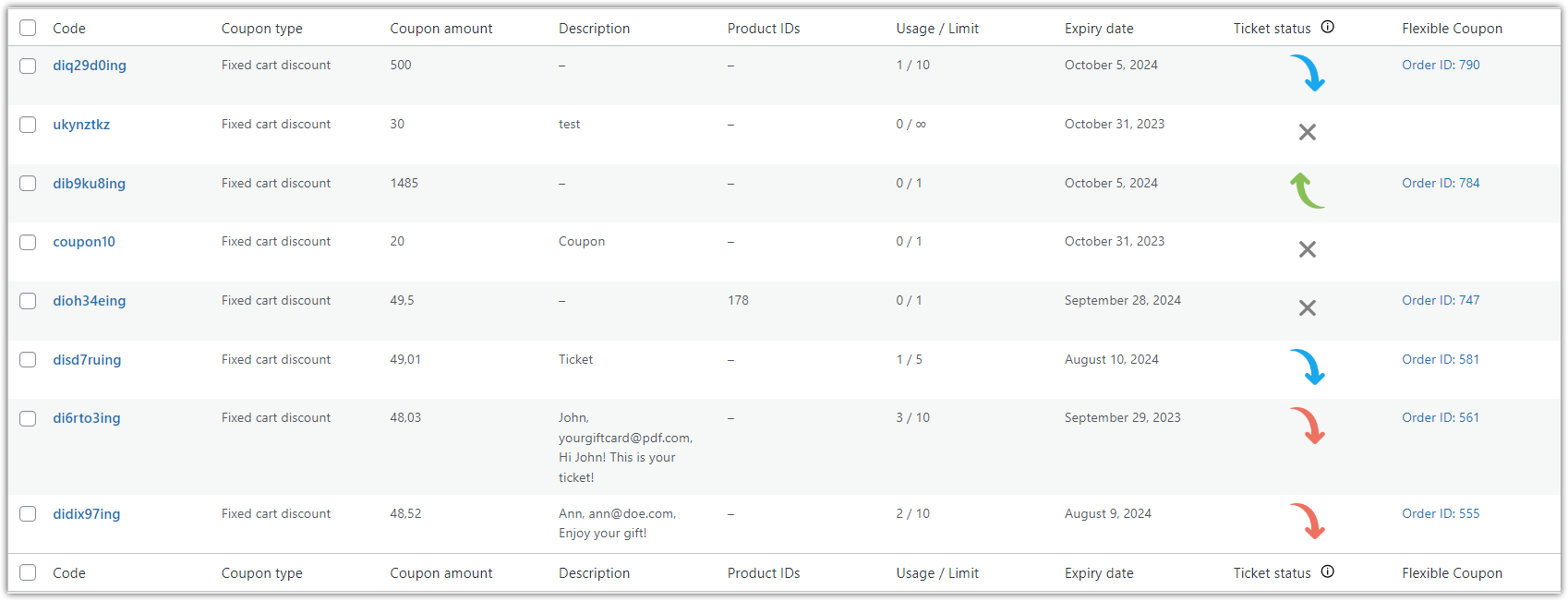
The Ticket status column gives staff a central place to check whether a ticket is still waiting to be used or has already been scanned. This helps reduce uncertainty when the same code is presented again and keeps validation information inside the WordPress administration area.
Before generating customer documents, create or edit the coupon product in Flexible Coupons PRO. The official product configuration documentation explains the settings available on the WooCommerce product edit screen.
QR code scanning and manual validation
The scanner is intended for use at an entrance, reception desk, or service redemption point. A staff member opens the QR Scanner page in WordPress, points the device camera at the customer’s QR code, and reviews the displayed result.

Successful validation changes the ticket status to Scanned. Staff can therefore see that the code has already been processed instead of relying on a separate printed list or manually maintained spreadsheet.
If the customer cannot display the QR code clearly or the device camera cannot read it, staff can select Insert code manually. Entering the ticket code directly provides an alternative validation method without requiring a new ticket to be issued.
How to configure the WooCommerce QR code reader
The setup combines Flexible Coupons PRO, the Event Ticket QR Scanner add-on, a WooCommerce coupon product, and a PDF template. You do not need to build a custom QR code connection between your store and a separate ticketing system.
-
Install the required plugins. Install and activate Flexible Coupons PRO, then install and activate the Event Ticket QR Scanner add-on.
-
Create the WooCommerce product. Add or edit the product that customers will purchase as a ticket, admission pass, voucher, or service credit.
-
Configure the coupon settings. Select the appropriate Flexible Coupons options on the product edit screen. Match the settings to how the product will be delivered and redeemed.
-
Prepare the PDF template. Create a clear layout for the document customers will receive. Add your branding, relevant ticket information, instructions, and the QR code in a visible position.
-
Review customer-facing information. Include only the details customers need, such as the event or service name, venue instructions, redemption conditions, or expiry information when applicable.
-
Place a test order. Check the complete customer journey, including product purchase, PDF generation, delivery, code display, and validation.
-
Test staff access. Open the QR Scanner page on the device that will be used at the venue and confirm that the assigned staff can follow the validation process.
The PDF design matters because customers may show the document on a phone or print it. Give the QR code sufficient space, avoid placing important graphics over it, and keep admission instructions easy to find.

What to test before selling QR-coded tickets
A test order helps you check both the customer experience and the staff workflow. Before publishing the product, review the following points:
- PDF readability: confirm that text, event details, and redemption instructions are clear on desktop and mobile devices.
- QR code placement: make sure the code is easy to locate and is not covered by another template element.
- Camera scanning: scan the test ticket using the same type of device staff will use at the venue.
- Manual verification: enter the ticket code manually to confirm that your team understands the fallback process.
- Status update: verify that successful validation changes the status to Scanned.
- Repeat presentation: check how the scanner displays a ticket that has already been processed so staff know how to respond.
- Printed version: if customers may print tickets, test a printed copy as well as the version displayed on a phone.
If one order needs to generate several separate tickets or coupons, the optional Multiple PDFs add-on may be relevant to the workflow. It is designed for creating multiple PDF coupons or tickets in one order and should be assessed separately from the QR scanner add-on.
Practical uses for a WooCommerce QR code plugin
A WordPress QR code plugin for WooCommerce is useful wherever a purchased document must be checked before a customer receives access, claims an experience, or uses a prepaid service.
- Event tickets: validate admission to workshops, concerts, conferences, exhibitions, classes, or local events.
- Venue passes: check access to attractions, activity centers, sports facilities, or other ticketed locations.
- Service vouchers: confirm a prepaid treatment, appointment, session, or package at a salon, spa, gym, or studio.
- Experience gifts: provide branded PDF documents for activities purchased as gifts and redeemed later.
- Retail vouchers: verify eligible in-store voucher use through a consistent scanning process.
- Promotional coupons: check a code when a customer claims an applicable in-person offer.
The underlying validation process can be adapted to different business models. You can change the WooCommerce product, PDF layout, customer instructions, and visual branding while keeping one familiar scanning workflow for staff.
Benefits for store owners and venue staff
Connecting ticket validation with WooCommerce can reduce the number of separate tools involved in everyday administration. The main practical benefits include:
- Automatic code generation instead of manually preparing QR codes for individual orders.
- Branded PDF documents that can match the event, service, or venue.
- Central ticket status available from the store administration area.
- Camera and manual validation for more flexibility at the point of entry.
- A reusable workflow for different tickets, vouchers, services, and experiences.
Key takeaways
- The Event Ticket QR Scanner adds QR code generation and validation to the Flexible Coupons workflow.
- The add-on requires Flexible Coupons PRO and does not operate as a standalone plugin.
- Unique QR codes can be included in branded PDF tickets, vouchers, and supported coupon documents.
- Staff can scan a displayed QR code or enter the associated code manually.
- Successful validation changes the ticket status to Scanned.
- The ticket status can be monitored from the WooCommerce coupon list.
- Testing the PDF, staff device, status update, and manual verification process before launch supports a more reliable admission workflow.
Summary: add a QR code reader for WooCommerce
Adding a QR code reader for WooCommerce gives businesses selling events, services, and experiences a structured way to connect online purchases with in-person validation. Flexible Coupons PRO handles the PDF coupon workflow, while the Event Ticket QR Scanner add-on generates and validates the QR codes.
With a configured WooCommerce product, a readable PDF template, and a tested scanning procedure, you can manage ticket delivery and validation through your existing store without developing a custom QR code system. The result is a flexible process that can be adapted to event tickets, venue passes, service vouchers, and other redeemable PDF products.
